


Vanguart has made fewer than 200 watches in its entire history. That scarcity is exactly why, when Sam Altman (OpenAI CEO) commissioned seven of them for the company’s inner circle this summer, the story moved as fast as people could search the web. “It’s a different level of awareness,” says Vanguart’s co-founder Axel Leuenberger.
The commission itself is based on Vanguart’s titanium Orb Flying Tourbillon, an approximately $180,000 watch before customisation. The Orb took three years to develop, with its 395-component movement combining a flying tourbillon with a crown-operated system that allows the wearer to switch between automatic and manual winding.
The OpenAI commission came about the way these things tend to, through people in common. “We share a fascination for engineering and complexity. In a way, we’re nerds too,” Leuenberger says of the arrangement. “They are at the absolute top of their game, bringing relentless perfectionism to their field, as we do in ours. We’re proud to celebrate that.”
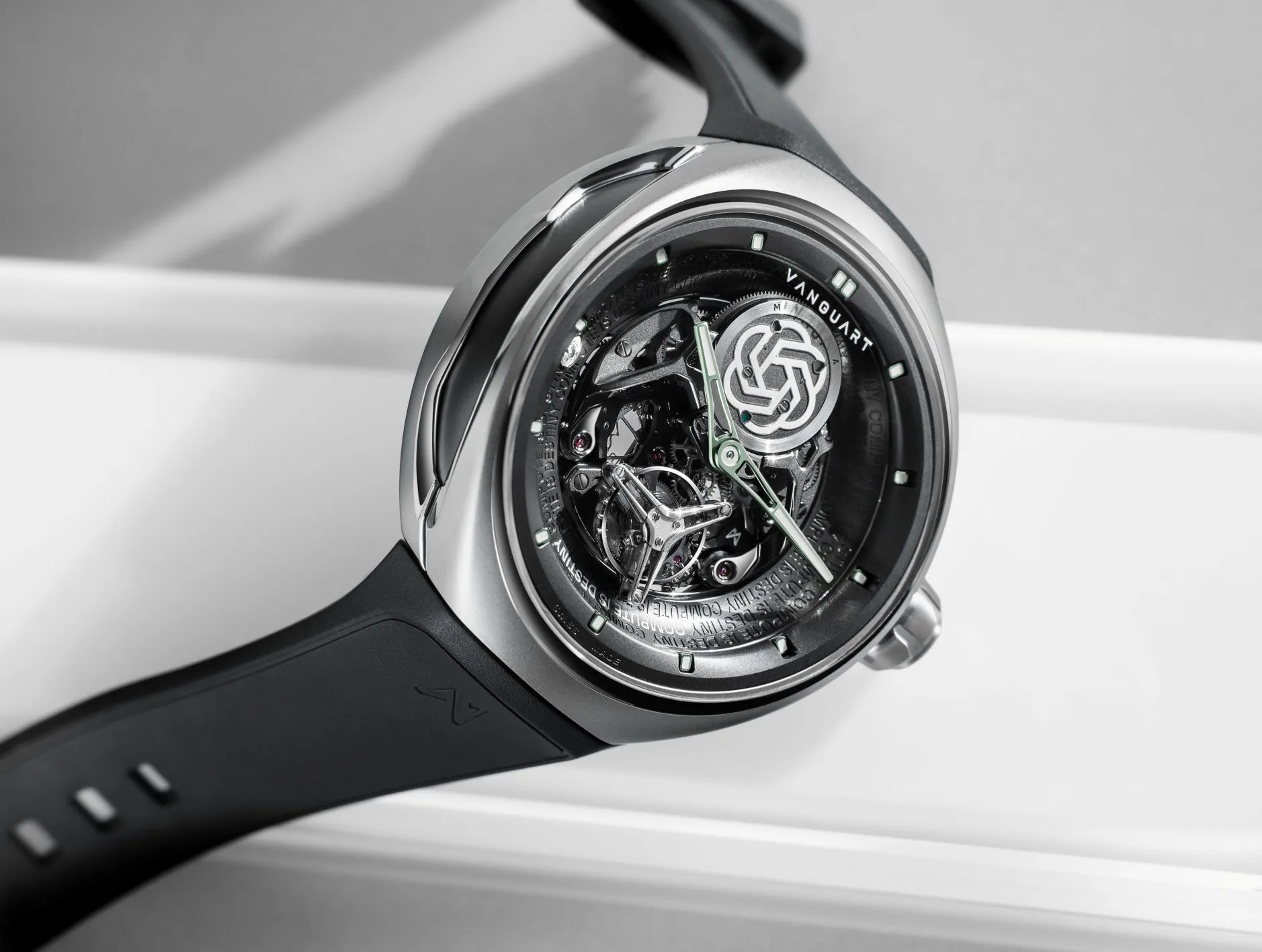

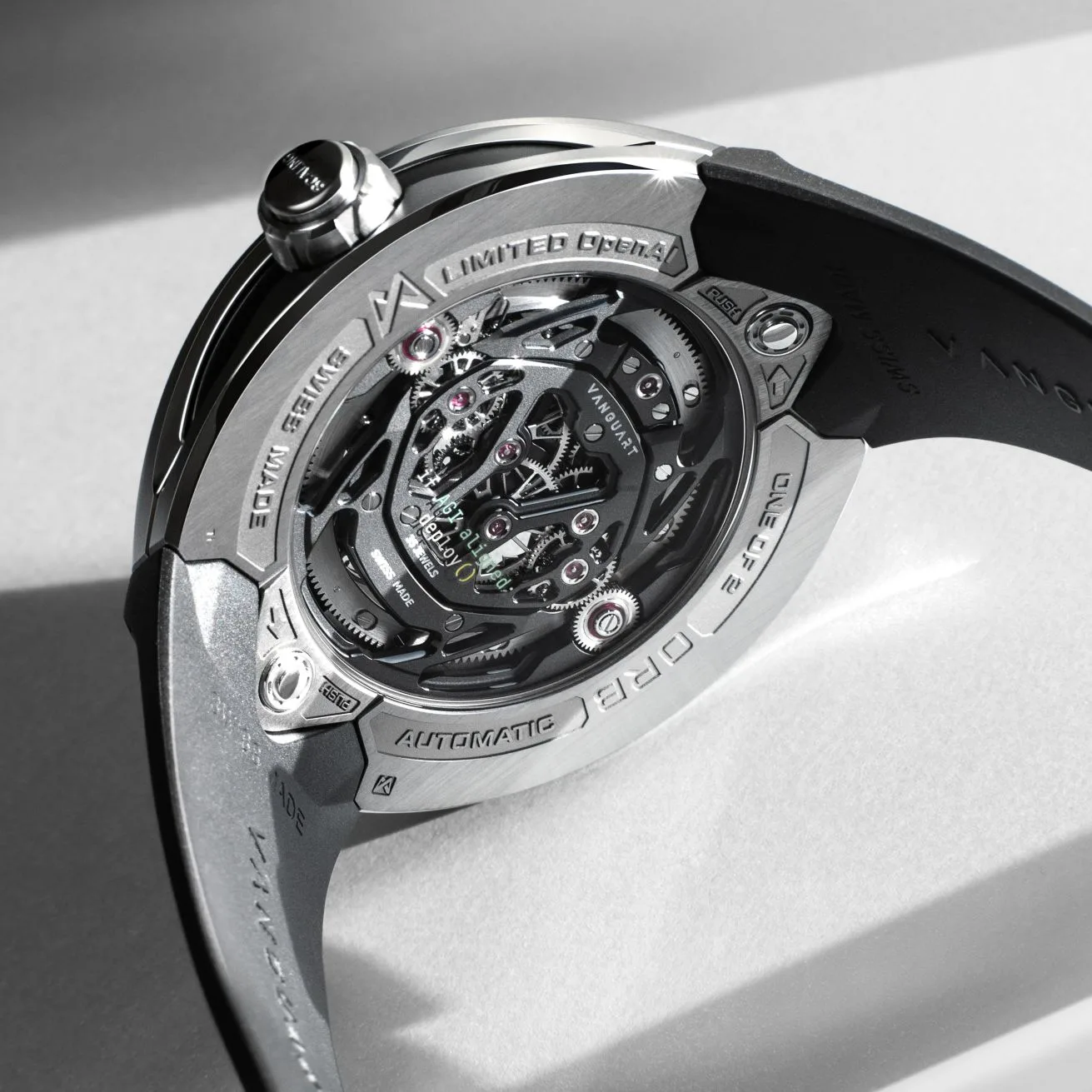
Axel Leuenberger flanked by the OpenAI Vanguart titanium Orb Flying Tourbillon.
There is a considerable precedent for this. Between 1898 and 1934, J.P. Morgan and J.P. Morgan Jr commissioned around 25 complicated Charles Frodsham watches, many of them presented to partners in the bank and family members. Leuenberger, however, is careful to frame this as an exception, not a strategy: “It’s not the purpose of the brand. For a commission such as this, the stars have to align.”
Where the commission aligned is on the watch itself. Around the rotor with OpenAI’s blossom logo is written: “COMPUTE IS DESTINY,” a phrase Leuenberger reads as OpenAI’s own founding gamble made literal, “Altman took a chance and put a billion dollars of electricity into the system to see what happened. Nobody was at that place before him.” The sentiment is not entirely metaphorical. OpenAI’s Stargate infrastructure programme carries a stated commitment of $500 billion and 10 gigawatts of US AI capacity.
In the watch, the crown pusher reads “SCALING.” The caseback, in Python-style syntax, carries the line: if AGI.aligned: deploy(). “That’s the last check before deploying AGI,” Leuenberger explains. “Is it aligned with humanity, or not?”
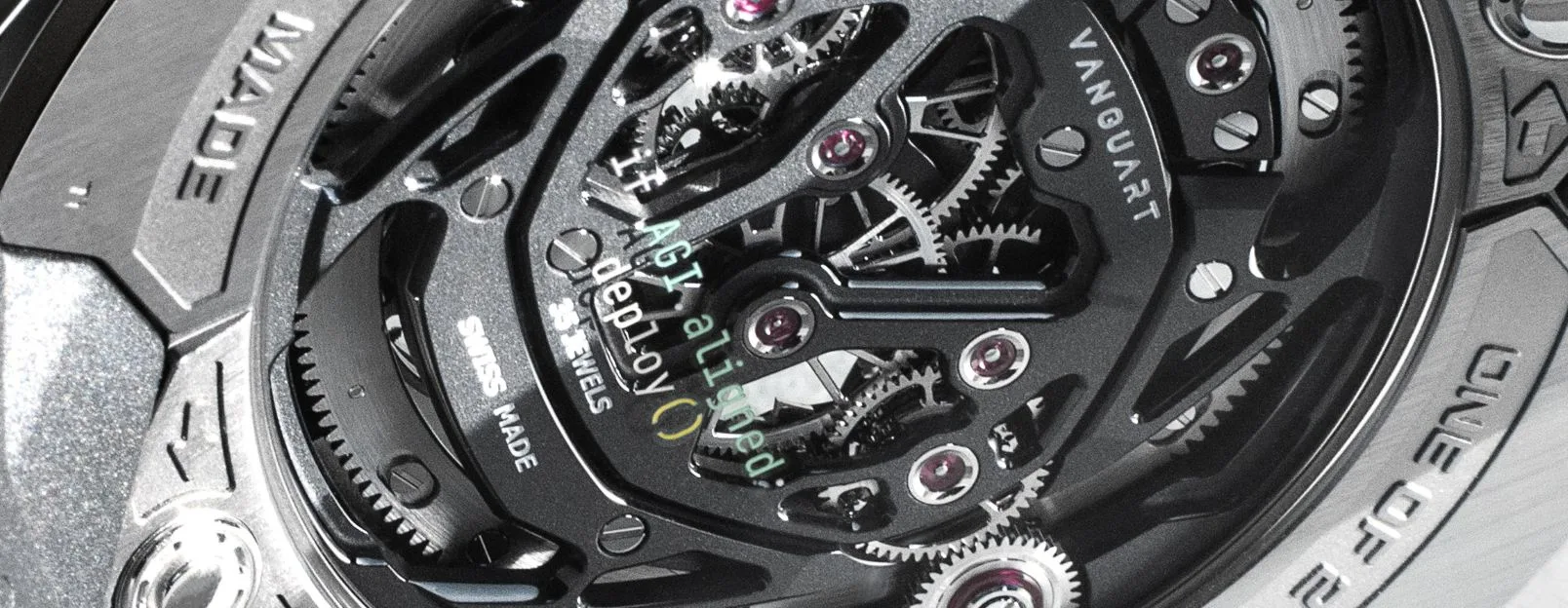
A close-up of the custom OpenAI Vanguart caseback, highlighting the AGI safety deployment code engraved into the movement.
The parallel is to Asimov’s First Law of Robotics, “A robot may not injure a human being or, through inaction, allow a human being to come to harm.” Leuenberger goes further: “No harm to humans, but maybe even more morally aligned too.” Pressed on whether that alignment extends to AI’s own footprint, the energy and water consumption behind the compute capability being celebrated on the watch, he has no answer.
Vanguart’s rise has also become, in a sense, a case study in how AI can now help shape a reputation. Leuenberger is clear-eyed that the internet tools did not create the brand’s credibility, they just moved it faster. “AI will take the extract of what we had on Google, and push it faster, okay? But it does not give the credibility. The base is already that the people themselves have chosen the watch and are wearing it.” He offers a cautionary counterexample: reports have circulated that Bad Bunny owns an Orb; he did a photoshoot with one, Leuenberger says, but does not actually own it. “AI is convincing. People should read the disclaimer.”
On what comes next, Leuenberger stays deliberately vague. He only confirms a new complication debuting at Watch & Wonders 2027, with one of watchmaking’s “Holy Trinity” complications layered into the mechanism and priced, as Leuenberger puts it, so the horology does not disappear behind the number.
Author: Andrew Hildreth
Learn more about Vanguart in our interview with Axel’s partner, Mehmet Koruturk and about the Vanguart Orb, HERE.


Show Comments +