


Watchmaking has always had an unusually productive relationship with its past. In the early 1980s, at the height of the quartz crisis, Jean-Claude Biver and Jacques Piguet acquired Blancpain for just CHF22,000 and rebuilt it around the very thing much of the industry was abandoning: traditional mechanical watchmaking. By 1991, sales had reached CHF56 million. The following year, Blancpain was sold to what became the Swatch Group for CHF60 million. Nostalgia, in that instance, proved remarkably profitable.
Zenith offers an even more literal example of the value of looking backwards. When production of the El Primero was ordered to stop in 1975, watchmaker Charles Vermot secretly saved its technical drawings and more than 150 stamping tools, hiding them in the manufacture’s attic. Less than a decade later, that cache allowed Zenith to put the movement back into production. A ten-year contract with Rolex followed, and from 1988 a modified El Primero powered the first automatic Daytona. Zenith credits the revival with restoring its status as a true manufacture.
There is a lesson in both stories. A watch company’s past is not simply material for anniversary editions; used intelligently, it can become part of its future. At Geneva Watch Days 2026, several maisons are doing exactly that, returning to the shapes, movements and design codes that made their names and finding somewhere new and interesting to take them.
ZENITH: Chronomaster Solo Sport
The Chronomaster Solo Sport is the answer to a question Zenith says it kept hearing from customers: if you could wear only one watch, which would it be?
We must remember that Zenith made its name with El Primero, launched in 1969, and was the world’s first automatic integrated high-frequency chronograph calibre. The Solo Sport takes a huge leap of faith by removing the complication altogether. For the first time, Chronomaster becomes a three-hand watch, leaving El Primero’s other defining characteristic, its 5Hz frequency, centre stage.
Designer Sébastien Gobert has made sure this is really an everyday watch. The bracelet’s micro-adjustment offers five positions and can be altered without even opening the clasp. The ceramic bezel has no protective metal ridge; instead, it is deliberately narrower than the case, so the steel itself helps shelter the ceramic from knocks.

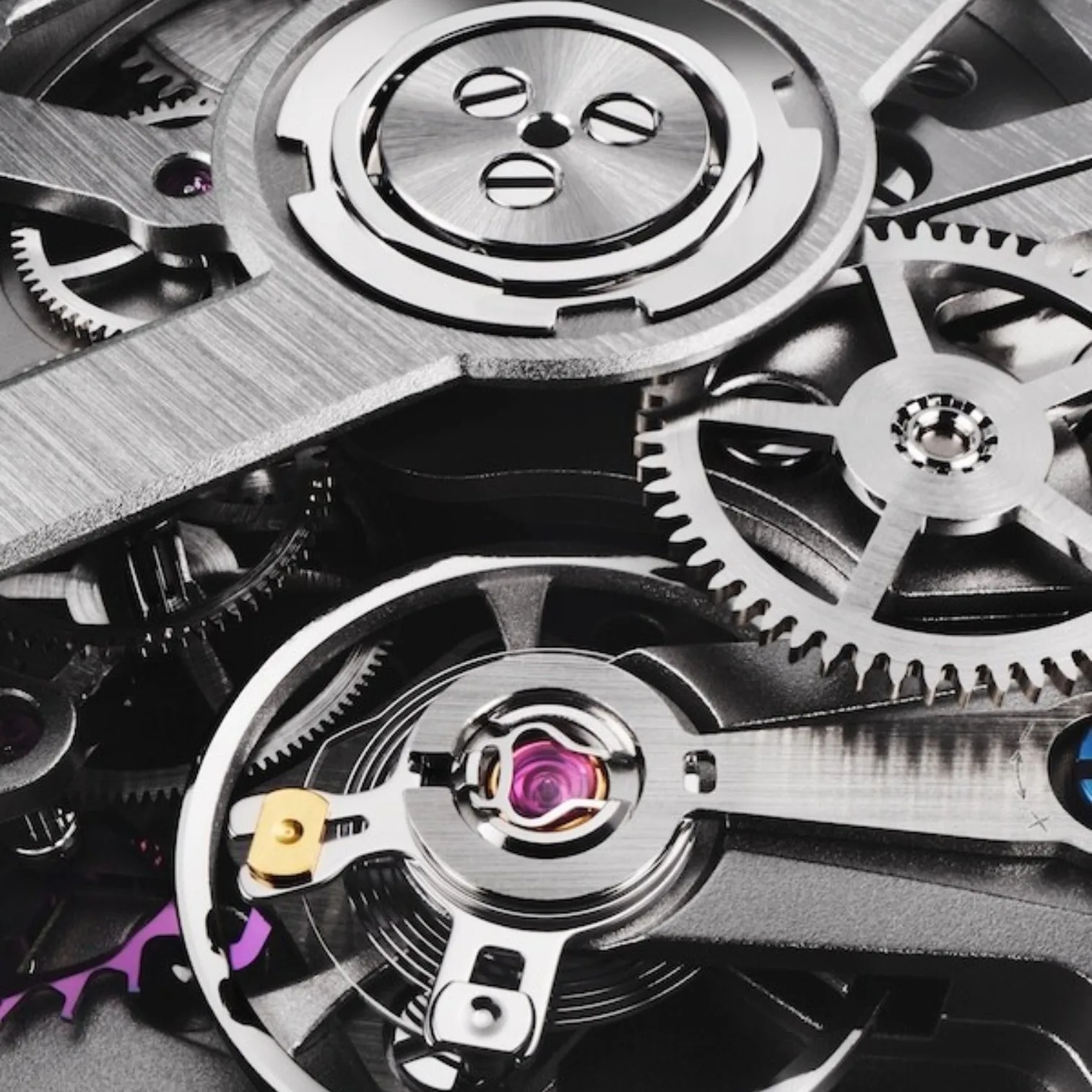
Left: The Zenith Chronomaster Solo Sport is offered with black, white or brown ceramic dials and bezels, with a further black
no-date version for those who prefer an even cleaner look.
Right: At the heart of the Chronomaster Solo Sport is the El Primero 3620, a 5Hz automatic calibre beating at 36,000
vibrations per hour and delivering 60 hours of power reserve.
If running at 36,000 vibrations per hour sounds like a recipe for accelerated wear, Gobert assured us that it is not. Zenith’s calibre silicon escapement wheels and pallet levers eliminate friction at the escapement altogether. With no friction, the physical mechanism eliminates wear and tear by design. What you have instead is a movement that delivers extraordinary timekeeping precision and a buttery seconds-hand sweep across the dial.
Add 200 metres of water resistance and the choice of date or no-date versions, and Zenith’s reply to the “one watch” question truly makes a lot of sense.
BVLGARI: Octo Finissimo Vianney Halter & Dazzle
Few contemporary watches have acquired icon status as quickly as the Bvlgari Octo Finissimo. Introduced in 2014, it has spent just over a decade making extreme thinness part engineering challenge, part visual identity. At Geneva Watch Days 2026, Bvlgari has done the unthinkable and let an independent watchmaker interfere with it.
The result is the Octo Finissimo Dual Time x Vianney Halter. Halter brings his particular taste for architectural complexity and retro-futuristic mechanics to the unmistakable geometry of the Octo. The references to his legendary Antiqua watch are obvious. The traditional watch face has been substituted by four independent, circular apertures rising out of the metal structural plate. Each window is framed by heavy, rivet-style bezels. They look like the metal portholes or pressure gauges you would find in Captain Nemo’s submarine. In fact, Bulgari’s design team and Vianney Halter explicitly noted that this piece was built to explore a retro-futuristic intersection of Victorian sci-fi and modern engineering, calling it a blend of Jules Verne and precision engineering.

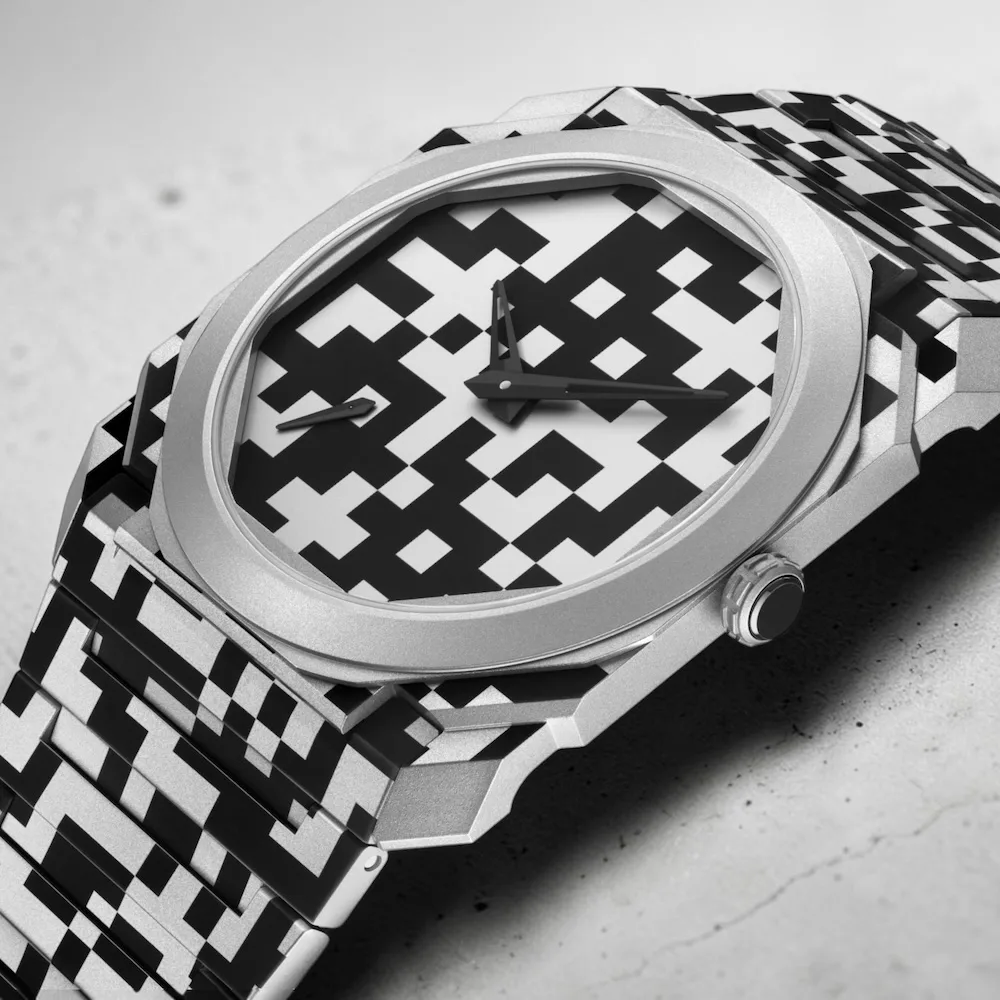
Bvlgari brings two very different Octo Finissimos to GWD 2026: the Dual Time x Vianney Halter, bringing the independent watchmaker’s distinctive architecture into the collection, and the laser-engraved Octo Finissimo Dazzle, inspired by automotive camouflage.
The four displays show local time, GMT, date and day/night indication, driven by the automatic BVF 200 calibre with 60 hours of power reserve. Only 30 will be made in titanium and 15 in pink gold.
Then Bvlgari takes the same core model in a very different direction with the Octo Finissimo Dazzle. Inspired by the camouflage used to disguise prototype cars, a laser-engraved geometric pattern runs across the titanium dial, case and bracelet until the Octo’s familiar angles begin to disappear.
LAURENT FERRIER: Classic Moon Dusk
Laurent Ferrier is renowned for an aesthetic philosophy centred on ultimate understatement, organic smoothness and neoclassical elegance. The Classic Moon Dusk – Série Atelier keeps the pebble-shaped case, ball crown and understated proportions that have become signatures of the maison and simply changes the atmosphere around them.
For the first time, the 40mm Classic case is made in yellow gold, which sets the palette for a dial graduating from pale taupe at its centre to deep chocolate brown at the edge. At six o’clock, the moon-phase display is cut from gold sheen obsidian, engraved and hand-painted with moons and stars, then crossed by an anise-yellow plique-à-jour enamel bridge.
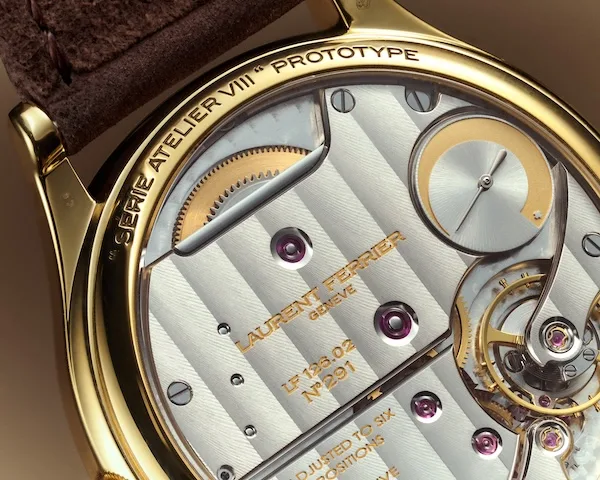
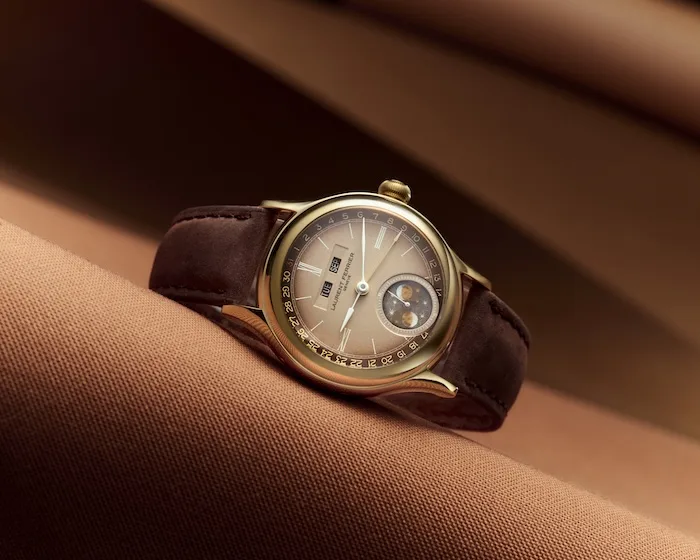
The Laurent Ferrier Classic Moon Dusk – Série Atelier features a warm taupe-to-chocolate dial and gold sheen obsidian moon phase with the hand-wound LF126.02 calibre, visible through the sapphire caseback and offering an 80-hour power reserve.
Mechanically, Laurent Ferrier leaves a good thing alone. The hand-wound LF126.02 combines an annual calendar with a precision moon phase and offers 80 hours of power reserve. The calendar automatically deals with 30 and 31-day months, requiring correction only once a year, on 1 March.
Limited to 20 pieces and priced at CHF93,000 excluding tax, the Classic Moon Dusk shows another way of reworking a house signature: not by dismantling it, but by changing the light in which we see it.
TRILOBE: Château Trente-Deux
Trilobe presents a useful counterargument to the idea that a house icon requires decades to establish itself.
The Trente-Deux collection appeared at Geneva Watch Days only last year, introducing not only a new integrated bracelet but Trilobe’s first movement designed, manufactured, decorated and assembled in its Paris manufacture. The name refers to the address of the maison’s atelier and was also the code name used during development of the calibre. One year later, Trilobe is already revisiting it.
For Château Trente-Deux, the watchmaker borrows the language of wine. It is an analogy that works because both activities have an obsession with provenance, time and patience.
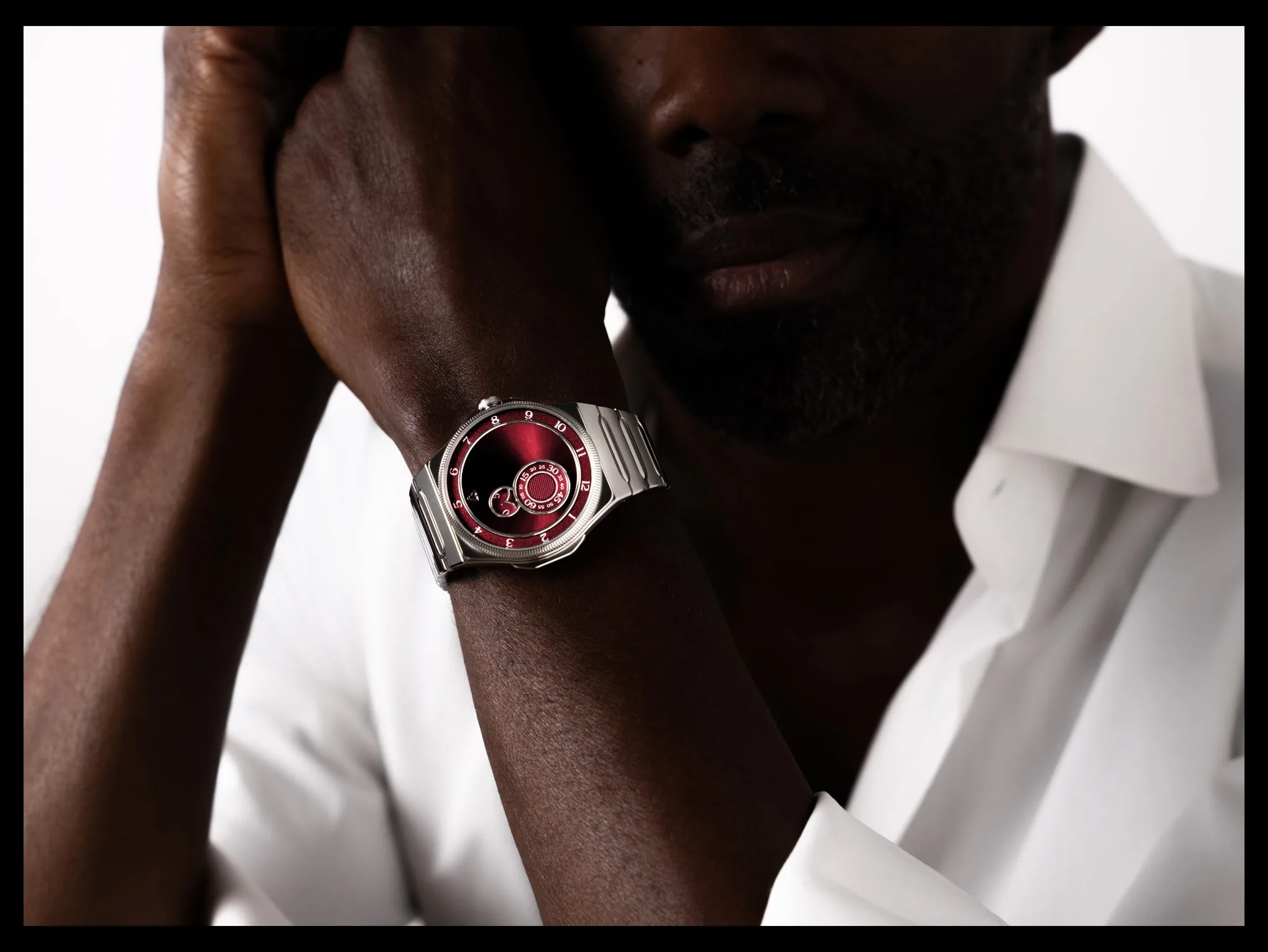

Trilobe’s Château Trente-Deux combines its distinctive rotating time display with a deep burgundy dial, while the reverse reveals the X-Nihilo manufacture movement, designed, decorated and assembled in Paris.
The 39.5mm steel watch features a deep burgundy dial, its principal disc given a matte sunburst finish, with the familiar Trilobe display. The seven-part case mixes mirror-polished, satin-brushed and micro-blasted surfaces, while beneath the dial the manufacture X-Nihilo calibre runs at 4Hz with a 42-hour power reserve. Every movement undergoes more than 400 hours of testing before leaving the Paris workshop.
Trilobe takes the joke pleasingly far. The first 100 watches, priced at approx. £15,000 + taxes, come with a bottle of French wine selected by the maison and a special caseback engraving. After those are gone, Château Trente-Deux joins the permanent collection.
A watch launched in 2025 can hardly be called an archival reference. That said, every archive starts somewhere.
These Geneva Watch Days prove that as much as everybody loves a novelty, there is comfort in a familiar watch. The houses that drive their heritage into the future with emotion, intelligence and vision, are highly likely to succeed.
Author: Julia Pasarón
Read more about GWD 2026 in our feature about the Best Affordable Luxury Watches presented at the fair.


Show Comments +